Ian Burger of SOLA Group explains why system design, grid access and commercial arrangements are critical to unlocking that flexibility.

South Africa’s energy transition is no longer judged only by how many megawatts of clean capacity are added to the grid. What’s equally important now is how effectively the energy being generated matches demand.
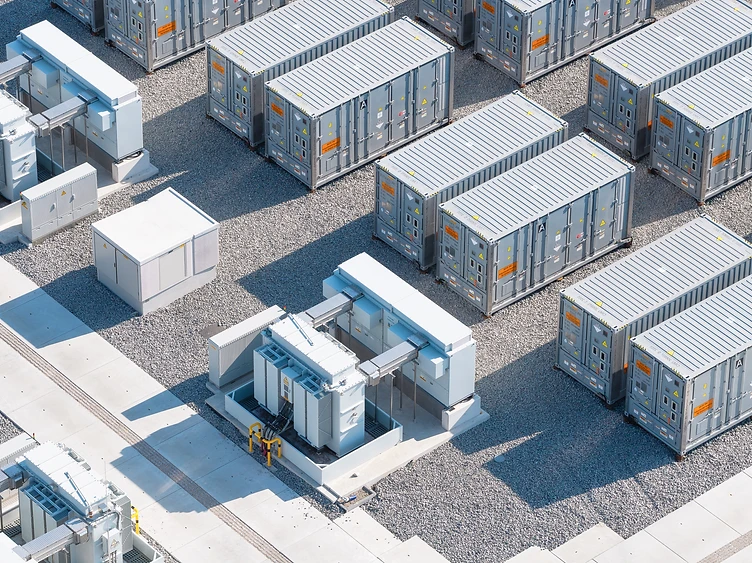
Batteries offer a proven way to bridge the gap between supply and demand, but only if their technical design, commercial structure and operating strategy are aligned.
By now, most people have a basic understanding of battery energy storage systems (BESS). For a long time, BESS has been framed as a broad-brush tool for grid stability or treated as a simple bolt-on to a power plant. In reality, a battery’s true economic value lies not in how much energy it can store, but in its ability to deliver clean energy exactly when it is needed within a buyer’s unique load profile, commercial contracts and grid constraints.
The industry should stop asking how many megawatt-hours of storage can be installed and start asking a far more practical question: What specific load and mismatch problem are we solving?
Consider this standard commercial scenario: a customer who needs 10 MW of continuous power procures 15 MW of renewable capacity. The difference is an intentional buffer, not a procurement mistake. It ensures sufficient yield during low-irradiance winter months. During summer, when the sun is at its peak, the plant produces significantly more power than the facility can use. This excess energy, which is paid for, is referred to in the industry as spillage. Businesses must factor in the cost of this spillage on top of what they spend on grid electricity when the sun isn’t shining.
Storing midday spillage and discharging it during peak demand hours sounds simple enough, but turning surplus generation into dependable flexibility requires far more than physical battery cells. It starts with designing generation and storage at optimal ratios to each other and to grid capacity. It also demands dynamic load profiling, accurate day-ahead forecasting and real-time operational management to balance variable solar yield against client demand.
Grid access adds another layer of complexity. The industry is navigating serious grid constraints. Battery storage is often touted as a silver bullet for grid capacity bottlenecks, but battery projects themselves often face significant grid-access queues. Buyers need to understand that storage assets do not automatically bypass grid limitations. Unlocking value from BESS depends on co-locating storage with generation or load, securing grid permissions and designing flexible commercial tariffs.
Successful integration requires a blend of technical and commercial expertise. SOLA’s practical experience comes from over 100 projects in the commercial rooftop sector, where small-scale projects require designing solar, storage and customer load together. This experience provides critical design and modelling expertise for larger utility-scale deployments. Projects like the Naos-1 Hybrid Solar and Battery facility illustrate how combining solar generation and battery capacity into a unified commercial asset can meet off-taker requirements within existing grid parameters. The Naos hybrid facility combines a 435 MWp solar PV plant with a 660 MWh battery storage system to supply clean, dispatchable energy to industrial off-takers across the national grid.
South Africa’s ageing coal fleet is approaching the end of its life, with around 8 GW scheduled to retire by 2030 and a further 9 GW over the following decade. Eskom has signalled it may extend some of these units to secure supply, which is understandable. But because coal units cannot simply be started up for the evening peak, they will run through the day and force the curtailment of solar and wind. Currently, gas and diesel plants provide that flexibility, but at a high, unpredictable cost. Pairing renewables with enough battery storage to meet that evening peak would allow coal units to retire one at a time sooner, with less gas to provide stability. The government has already procured about two gigawatts of battery and hybrid storage capacity, and a ministerial determination has prioritised 4.6 GW of BESS and 5 GW of gas. The real test will come with hourly reconciliation, which Eskom has already approved and which, for larger projects, will apply at the latest when the South African Wholesale Electricity Market (SAWEM), expected to launch in April 2027, goes live.
When this happens, it will intensify the financial impact of generation timing. Most private power arrangements currently operate under monthly time-of-use reconciliation but will shift to hourly reconciliation. Midday solar surplus will no longer offset evening grid usage on a monthly bill, and unmatched hours will carry direct financial penalties. Batteries offer a direct way to avoid these penalties, provided their design, commercial structures and daily operations are built around real customer profiles, intelligent forecasting and charge and dispatch planning.
In a world with hourly reconciliation, integrated storage will become an economic necessity.
In our view, industry analysts and financial modellers are currently understating South Africa’s future need for battery storage. Many formal market models still assume that wind and gas generation will do most of the balancing. Two refinements would give a fairer picture. Most models dispatch gas on the system marginal price alone, overlooking the capacity payments needed to keep those plants available, and so understate its real cost relative to batteries. They also underplay the fast, cloud-driven swings in solar output, which gas cannot follow but batteries can. As models are updated to reflect these factors, the actual demand for battery capacity is likely to prove far higher than current forecasts suggest. In addition, capacity and ancillary markets that will open in a later phase of SAWEM will offer additional opportunities for battery assets.
The industry will need to move beyond cautious spreadsheet projections and plan storage around how the grid actually operates in real time. Meeting South Africa’s true capacity needs isn't just a matter of scaling storage. It is an exercise in turning battery projects into dynamic, flexible assets built for the realities of the grid.