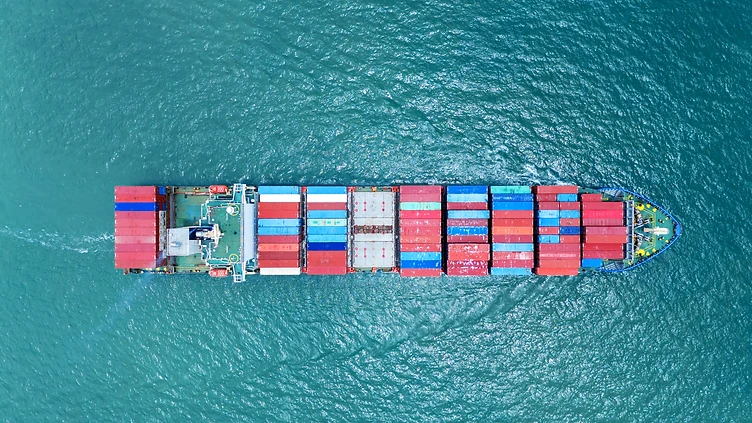
Battery energy storage is becoming an increasingly practical option in commercial shipbuilding, with modular systems letting vessel operators specify the capacity and functionality they need without fundamentally changing an established ship design.
Damen Shipyards Group recently contracted EST-Floattech to supply two additional Octopus Series battery systems for its Combi Freighter (CF) 3850 vessels. The order continues an existing framework agreement between the companies and will bring the number of EST-Floattech systems installed on this vessel type to nine.
The repeatability of the installation stands out. Rather than treating battery storage as a bespoke addition to an individual vessel, Damen can incorporate it as a configurable option within a proven cargo ship platform.
The CF 3850 is designed for short-sea shipping and incorporates an optimised hull form alongside options intended to improve operational efficiency. Damen reports that it has received orders for 50 vessels of the latest generation over five years.
The EST-Floattech Octopus battery system can be configured with storage capacities ranging from 240 kWh to 1,320 kWh, depending on the operator's requirements.
Potential applications include peak shaving, bow-thruster support and zero-emission port operations. The functions available depend on the battery configuration selected and how the system is integrated into the vessel's electrical infrastructure.
Peak shaving allows batteries to meet short periods of high electrical demand, reducing the peak load placed on onboard generators. Bow thrusters, used when manoeuvring vessels in confined waters, are one example of equipment that can create substantial short-duration power requirements.
Battery operation can also reduce the need to run conventional generators during certain port activities, although the extent of any fuel or emissions savings will depend on the vessel's configuration and operating conditions.
Arjan de Vries, Manager Procurements at Damen Cargo Vessels, said the company aims to integrate established technologies into its proven vessel designs. He highlighted the Octopus system's modular flexibility, which allows the battery installation to be scaled to individual customer requirements.
For EST-Floattech, successive installations on the same vessel platform also provide opportunities to compare system performance and refine the technology.
Jelle Meindertsma, Sales Manager at EST-Floattech, said the continuing collaboration allows the company to evaluate its systems across successive generations of the CF 3850.
The latest order shows how battery storage is moving toward more standardised integration in commercial shipping, where managing electrical loads and configuring systems around operational requirements can be as important as the installed storage capacity.